Morgan Simmons · 22 October 2026
Riveroak District Weighs Renewable Energy Tradeoffs After Community Input on Wind Farm Plans
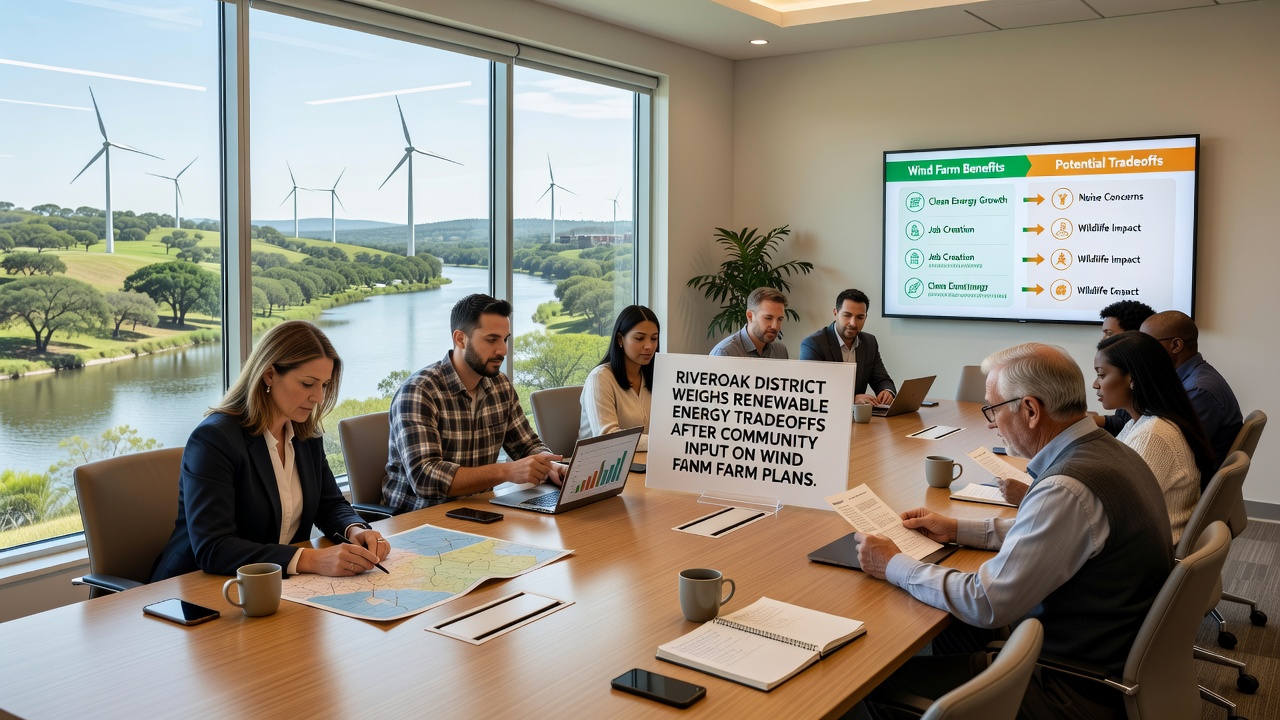
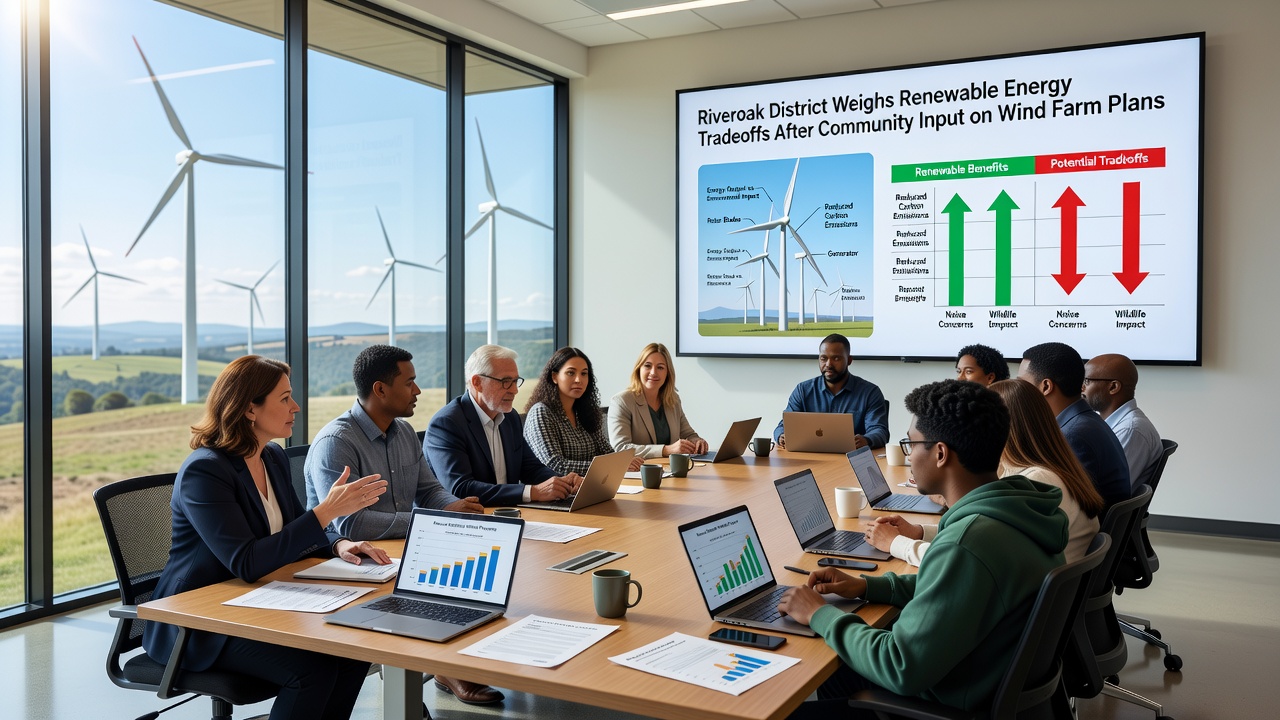
Local authorities in Riveroak District opened a series of public consultations in early October 2026 to gather resident feedback on a proposed wind farm development, and the resulting input has prompted officials to examine the balance between expanded renewable capacity and potential impacts on land use as well as local ecosystems. Planners received more than 1,200 written submissions along with comments from three in-person forums held across the district, each session focusing on specific aspects such as turbine placement, noise levels, and projected electricity output that could reach 180 megawatts once fully operational.
Community Feedback Shapes Review Process
Residents raised questions about visual changes to the skyline, effects on bird migration routes, and the long-term maintenance of access roads that would cross agricultural parcels, yet many participants also highlighted the value of reducing reliance on imported fossil fuels and the possibility of creating skilled jobs during construction phases. District staff compiled the comments into a 78-page summary document released on 12 October 2026, and this report now serves as the foundation for further technical assessments that compare projected carbon reductions against measured biodiversity data collected by independent ecologists over the past eighteen months.
Energy Output Projections and Grid Integration
Modeling conducted by the district's energy consultants indicates the wind farm could supply electricity equivalent to the annual needs of roughly 140,000 households, a figure derived from wind resource measurements taken at three meteorological towers installed on the proposed site since 2024, and these projections align with performance benchmarks reported by similar installations operating in comparable terrain across northern Europe. Grid connection studies completed in September 2026 confirmed that existing transmission infrastructure requires only modest upgrades to accommodate the additional load, while storage solutions such as a 50-megawatt battery facility would help smooth output fluctuations during periods of variable wind speeds.
Environmental and Land Use Considerations
Ecological surveys documented the presence of several protected bird species and identified two hedgerow networks that function as wildlife corridors, prompting designers to adjust turbine layouts so that minimum setbacks from these features exceed 250 meters. Soil assessments further revealed that construction activities could affect drainage patterns on 35 hectares of arable land, although mitigation measures including permeable access tracks and sediment traps have been incorporated into the revised site plan. Researchers from the University of Melbourne's Centre for Environmental Research have contributed comparative data on grassland restoration techniques used at Australian wind projects, and district biologists are evaluating how those approaches might apply locally to minimize long-term habitat fragmentation.
Economic Factors and Funding Mechanisms
Project developers estimate that construction would generate 320 temporary positions and sustain 45 permanent roles focused on operations and maintenance, while business rates paid by the operating company could deliver an estimated £2.1 million annually to the district treasury once the facility reaches full output. Funding discussions have centered on a combination of private investment and public sector support through the Canadian federal green infrastructure program, which has previously backed similar renewable initiatives in British Columbia, and preliminary cost-benefit analyses suggest payback periods ranging between nine and twelve years depending on wholesale electricity price trajectories.
Next Steps in Decision Timeline
Council members scheduled a follow-up workshop for 28 October 2026 to review updated modeling that incorporates the latest community suggestions, and any final recommendation will require approval from both the district planning committee and the national energy regulator before construction permits can be issued. Additional public comment periods remain open through the end of November, allowing residents to respond to the revised layout options that emerged from the October consultations.
Conclusion
The ongoing evaluation process demonstrates how Riveroak District continues to integrate resident perspectives into infrastructure decisions while addressing measurable tradeoffs between renewable energy expansion, ecological preservation, and economic returns, and outcomes from the current review will inform similar projects planned elsewhere in the region over the coming decade.